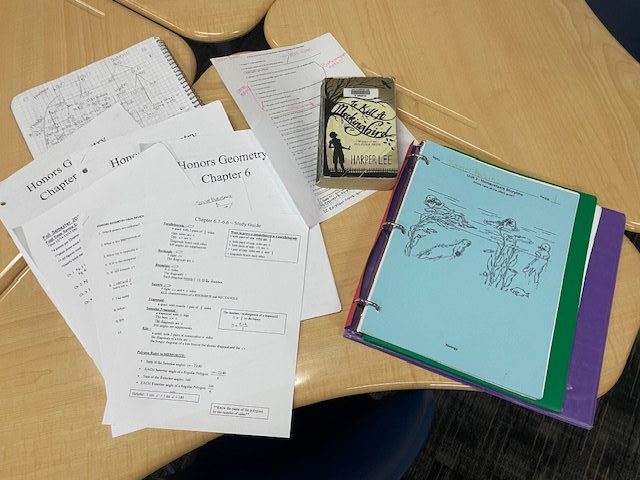


LOS ALAMITOS, Calif. — Students at Los Alamitos High School typically take several Advanced Placement courses to seem more impressive and appear as competitive applicants to colleges. These AP courses are designed by the College Board, a non-profit organization, and then taught by teachers who use the course descriptions designed for each AP course in order to teach a class as the rigorous AP standard.
“APs are very beneficial for students who are planning to attend college, whether that’s community college or straight to a four-year, because those classes are rigorous. So they’re going to challenge you,” said Mrs. Ford-Patterson, who works in the LAHS College and Career Center. (pull quote)
These courses are college-level classes that are designed to replicate the rigor of a college course through their material and applied thinking skills. Additionally, students have the opportunity to receive college credit if they receive a three or higher on the optional AP exams in May.
“Students who take AP courses send a signal to colleges that they’re serious about their education and that they’re willing to challenge themselves with rigorous coursework,” said College Board on their website.
AP courses are highly rigorous, with students often taking several at a time. For individuals who take these classes, this can satisfy their desire for a high academic performance. However, this often results in increased stress and overall anxiety that pertains to their assignments and tests. Many students work to please their parents and then spend hours sitting down for one or more exams in May.
The mental strain that can be caused by these classes can often stem from a desire to be perfect and to obtain the most competitive academic level possible. At 16 years old, students could be taking six college-level classes, on top of internships, sports, a job and other responsibilities or extracurriculars.
“Every time I do an assignment, I am miserable and feel like I can never catch up with all the things I need to finish,” said Naomi Dixon, an LAHS sophomore.
This surmounting pressure to do everything and maintain straight A’s is often too much pressure for students, leading to compromises such as less sleep, burnout or poor academic performance.
Some students may also feel the pressure to perform well at home. Parents, encouraging them to get into a good college, personal pressure to do well and even a desire to keep up with friends that are performing well.
During class, students are often overwhelmed and are completing work from other classes to try and get ahead. They spend their lunch time in club meetings, completing assignments or studying for tomorrow’s test.
Luckily for these students, there are ways to cut out this pressure through study habits such as repetition, teaching someone else and sticking to a schedule.
“With anything challenging in life, there is going to come stress,” said Mrs. Ford-Patterson. “Taking AP classes is a good way to sharpen skill sets that will go with you for the rest of your life.”
Although AP classes can be overwhelming to many students, they can have long-term benefits for students through the college credit they provide and the ability to show college readiness.
Maintaining good study habits, such as time management and getting proper sleep, can help reduce some of the stress associated with these classes, helping students manage their mental health and improve their academic performance. Good luck if you’re in one of these classes now!
This article was originally published in the Griffin Gazette: Insight magazine in a condensed version. You can read the magazine version here.