

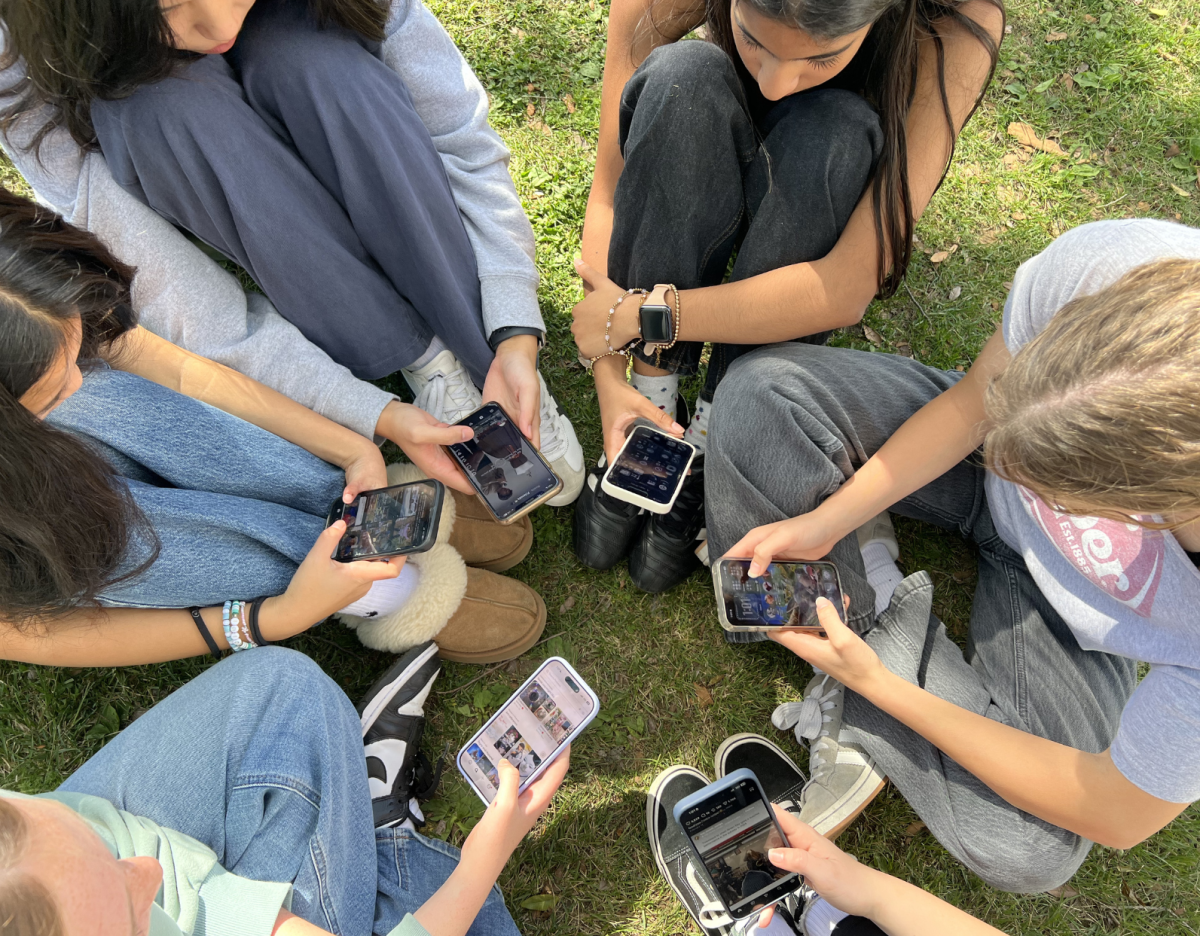
LOS ALAMITOS, Calif. — Technology has impacted our lives in so many ways. Now, it is normal for people to be on their devices for most of the day. Even kids as young as two years old are being introduced to electronics such as tablets and smartphones. This behavior in our society has been shown to cause detrimental changes in our brains and our health.
According to pediatrician Michael Rich, director of the Center on Media and Child Health at Boston Children’s Hospital, the human brain is constantly forming neural connections, and screen stimulation can disrupt that process. Studies have also shown that sleep is essential to brain development, and using devices that emit blue light before bedtime can disrupt sleep patterns. Many teens often stay up texting or staring at screens in bed, not realizing that this is depriving them of the deep Rapid Eye Movement sleep that is essential for processing and storing information from the day.
“So even if they stay awake in algebra class, they may not remember what happened in class yesterday,” said Rich in a Harvard Medical School article.
Social media platforms such as Instagram, TikTok and YouTube thrive on adolescents staying on their platforms for extended periods of time. Since a young person’s brain lacks a fully developed self-control system, it is hard for them to stop their obsessive behavior, such as scrolling through many 30-second-long videos on these platforms. While these short-form videos, known as Reels on Instagram and Shorts on YouTube, may be extremely entertaining and easy to watch, they are also very damaging to one’s brain.
“There’s no substance that [students] are actually getting from watching those videos. There could be things that [they] potentially could learn, but there are so many things that are also negative that a student might see on social media that it’s almost as if it can impact their brain in terms of how they interpret information,” said Los Alamitos High School psychologist, Miss Belisle.
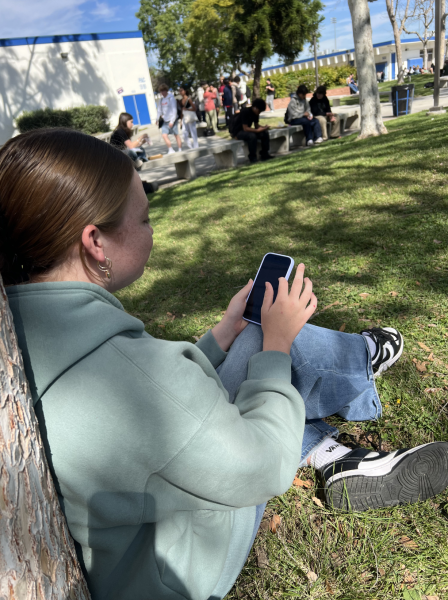
Though it may seem like mindlessly scrolling on a device is pure entertainment and not majorly affecting anything, it is truly the opposite. These behaviors can affect students even at school. If a student is scrolling on their phone in the middle of the night, and then they wake up the next morning to go to school, in class, they might have more difficulty focusing and getting their work done. Then, they might get easily distracted and anxious and start comparing themself to the person next to them. This is why it is important for everyone, especially students, to limit their device usage and use technology to their advantage.
According to Christian Jarrett of BBC’s Science Focus, a cognitive neuroscientist and writer, a large team of brain scientists based in China conducted a study. They scanned the brains of more than a hundred undergrad students and had them complete a questionnaire about their habits of watching short videos on social media. Ultimately, researchers found that the students who felt the most attached to short videos had noticeable differences in their brain structure.
“These participants had more grey matter in their orbitofrontal cortex (OFC) — a region near the front of the brain involved in decision making and emotional regulation,” Jarett said. “Similarly, they had more grey matter in their cerebellum — a small, cauliflower-shaped structure at the back of the brain that plays a role in movement and emotions.”
Much of the part of the brain that excessive screen time damages is in the frontal lobe, which undergoes massive changes from puberty to adulthood. It also controls important things, such as thinking, emotional regulation, movements, self-control and even personality. However, the good news is that people can prevent this by limiting how many short videos they watch and for how long they watch them.
Although there are many negative effects of social media and technology on society and people’s brains and health, there are many positive effects as well.
“People who may have struggled to connect socially or in person can connect through social media, which I think could be positive. Also, finding people who are interested in the same things as you. I feel like a lot of times, teens walk through life feeling alone or like nobody understands them. But then [they] can find other people who are into the same things [they] are,” said another LAHS school psychologist, Miss Morris.
Social media was created in the first place to help people connect over long distances or when they could not see each other in person. It was made so that people could feel like they belonged somewhere and could also find new interests and friends they would otherwise never have been introduced to. Now, social media and technology have grown so much that they could start to take a negative toll on people and shift away from the positive things they had started with.
So, whether people use technology to their advantage or to their disadvantage is up to them. However, now that people know the effects, both positive and negative, they can make informed decisions.
This article was originally published in the Griffin Gazette: Insight magazine in a condensed version. You can read the magazine version here.