
LOS ALAMITOS, Calif. — From a young age, students in the United States are taught that the ultimate educational goal is college. It is the finish line at the end of the race and the final, most vital step at the end of their educational journey. Children brainstorm their dream schools and are expected to take up extracurricular activities to make them appealing to university admissions when the time comes.
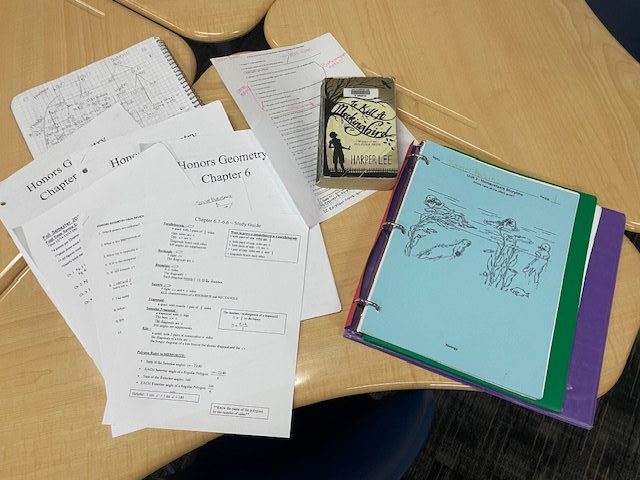
The pressures of college and the judgment of admissions weigh on the academic career of many students at Los Alamitos High School. From taking on loaded schedules with multiple Advanced Placement classes to practicing varsity sports for three hours a day, LAHS students take action to ensure their admission to top colleges. What is not understood by today’s teenagers, however, is that college is not the only path to success. Where does this pressure come from and how does it impact students?
The idea of university as the ideal path often originates in a student’s upbringing with pressure from parents. Los Alamitos, although small, is densely populated with people who have higher education and successful careers. Parents who committed to a four-year college right out of high school are only familiar with the singular path to success and therefore push their children to take the same steps. They urge their children to take hard classes and get good grades because academic achievement will lead them to their ultimate goal.
In addition to pressure from parents, pressure from friends and peers is a main contributing factor. Friendship is a central part of a child’s educational experience. Starting as early as elementary school, students feel the weight of academic competition with their peers as they compare test scores and overall grades in classes. This only increases as they enter high school, where they are influenced to create schedules that match the rigor of their friends.
The mixture of pressure from parents and peers leads to increased stress among high school students. Often, students feel like their grades need to be perfect to get admitted to an elite university.
“(There is) a certain amount of stress that attaches to (college pressure) if they feel like their grades have to be perfect to get into college. Or that they have to take all APs, things like that really impact students negatively,” said Mrs. Schaeffer, the LAHS College and Career Center counselor.
While a lot of the stress students face impacts them negatively, there is also a positive aspect to this pressure, as people often need outside motivation to accomplish things. It is vital, however, to have a balance between the motivational and stressful aspects.
“I don’t think (the stress is) all bad, but it definitely needs to be balanced with other messages that say, you matter above and beyond your grades, that you’re important, that you’re capable, and that not all the paths that you might want to pursue in life require college,” Mrs. Schaeffer said.
With constant pressure from numerous sources and so many options, it can be challenging for students to accurately map out their futures at such a young age. The influence from peers and parents to enroll in a university leaves many students feeling as though there is no other option. However, college is not necessary for everyone. There are a variety of professions in the trades that require different skillsets than what a higher education provides.
“People see working with your hands as less valuable than other jobs where people are behind a desk or working in business. People think business jobs make more money, but people working in the trades can also do well, especially if they prove they are good at what they do,” Mr. Parsons, husband of LAHS teacher Mrs. Parsons and active trades worker, said.
Students are often led to believe that anything other than college is to be seen as “less than,” however, careers in the trades can be successful and do not require a college level of education, but a more specific skillset.
At LAHS, the College and Career Center provides Career Technical Education programs that allow students to learn skills necessary for professions like EMT, fire safety or the film industry.
While CTE gives students a narrow path into the world of trades, in the past, LAHS had programs like wood shop and auto shop that taught students valuable skills for craftsman and mechanical work. Both the current CTE programs and past ones play an important role in introducing students to an alternative pathway that doesn’t need to involve a four-year college education.
Additionally, the College and Career Center works with students to direct them on a path to success, providing students with the California Colleges website that has personality surveys and other features that help align students with a career best suited for them.
Last semester, the annual Trades Fair was also hosted by the College and Career Center, an event that aims to expose students to jobs in the trades. Multiple specialists in different fields in the trade industry came to LAHS to talk to students about possible careers.
This yearly event is a great opportunity for students to discover alternative possibilities for their future careers and lessen the pressure to go to university that many students constantly feel. The LAHS College and Career Center is working to expand this event and incorporate it into the College Fair to allow more students to get exposure to trades.
Students are influenced by many different factors to go to college. However, whether it is a four-year college pathway, trades training or a doctorate degree, it is important that students utilize available resources, ignore outside pressures and do what is right for themselves when deciding on a career pathway.
This article was originally published in the Griffin Gazette: Insight magazine in a condensed version. You can read the magazine version here.