

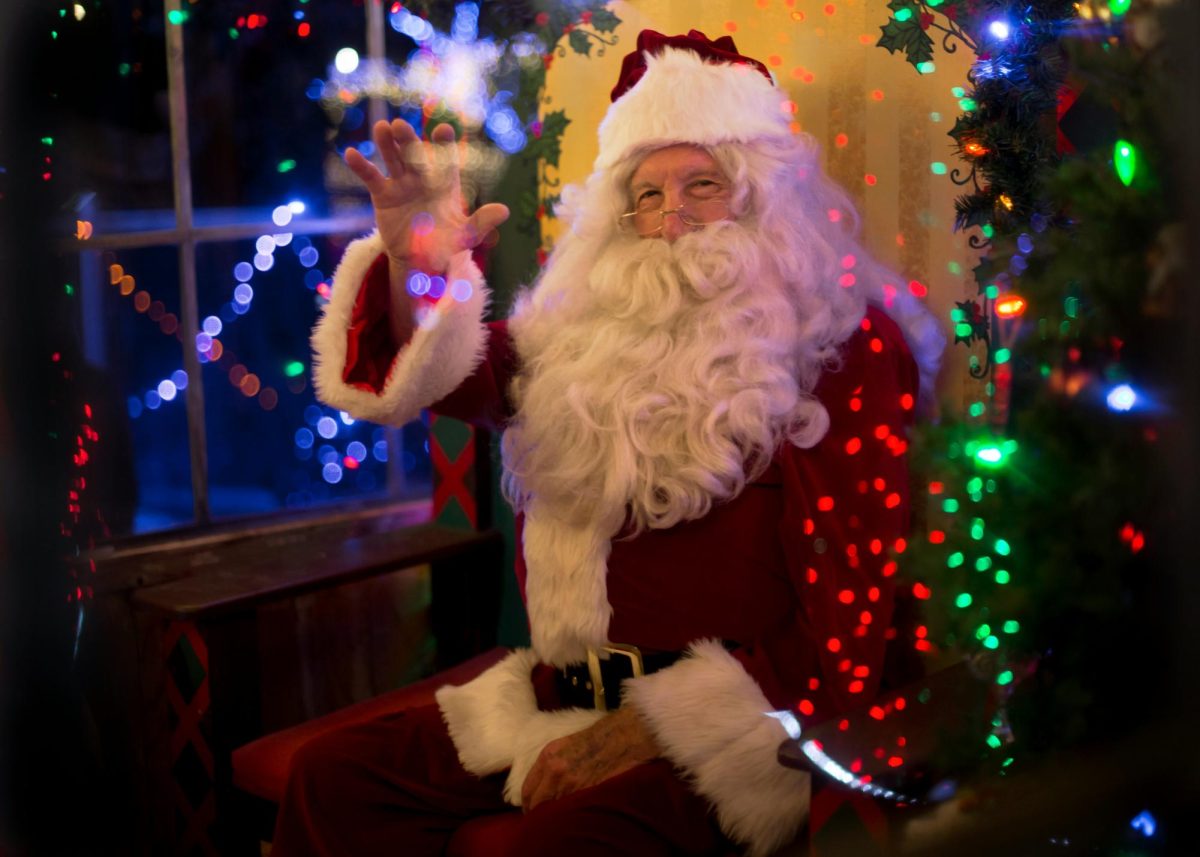
LOS ALAMITOS, Calif. – Ever wonder how other countries celebrate Christmas? While most Christmas traditions are jolly and wholesome, some cultures have their own vision of how to teach kids morals during the holiday season.
Santa Claus
Everyone knows the story of Santa Claus, the jolly old man who gives presents to boys and girls, as this is the most widely celebrated Christmas tradition in American culture.
The origin of Santa Claus comes from a mix of Christian and pagan traditions. The man Santa Claus is inspired by the real-life bishop Saint Nicholas, who was known for his generosity and gift-giving.
Santa is found in many cultures, including Dutch, Swiss and German, with all versions sharing similar names and appearances. Even before Christianity spread across Europe, pagan traditions shared the modern themes of Christmas. German pagans celebrated the mid-winter holiday, which they called Yule.
“I know that in Germany they polish their shoes and leave them outside so Santa can put treats in them,” said Daniel Davenport, a senior at Los Alamitos High School.
Krampus
The Krampus is the dark counterpart of Santa Claus; he is a demonic-looking figure with goat-like characteristics and horns. He is seen with a large sack on his back and birch twigs to punish misbehaving children.
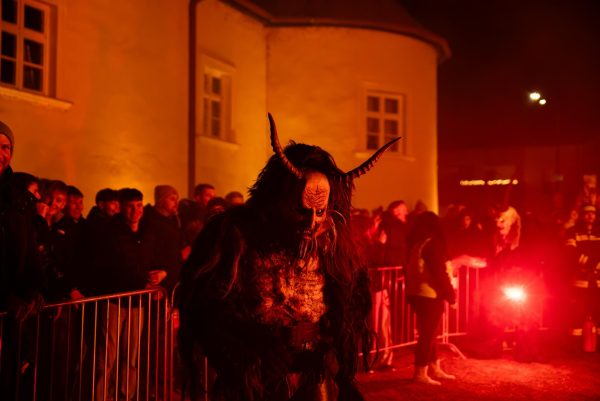
The origin of Krampus lies in Germanic Alpine-Austrian pagan traditions. His role in Christmas is to be a punisher for bad children alongside Saint Nick. In Austria, Germany and similar locations, Christmas Eve is known as Krampusnacht, a night when Krampus roams the towns and looks for naughty kids to punish.
Today, Krampus is celebrated in towns across Austria in an event called the Krampus run, where people dress as Krampus and chase onlookers and children around. Krampus’s influence has even spread across the world, with this tradition being more well-known.
“I know Krampus, he’s like a demon that terrorizes all the bad kids,” said Davenport.
Icelandic Folklore
Gryla is an ogress monster from Icelandic tradition. Her appearance is said to be repulsive, and she eats naughty children during Christmas. Gryla also has a family with her sons, the Yule Lads and her giant Yule Cat.
The Yule Lads are 13 mischievous pranksters who roam Iceland during December. Each does it their own way and has a district name that corresponds to their role. The yule Lads do reward good-behaved children by leaving small gifts in their shoes during the night.
The Yule Cat is a monstrous black cat that roams the towns of Iceland on Christmas Eve. The cat looks for children who have not gotten new clothes. If a child has gotten new clothes for Christmas Eve, the cat will spare them, but if they haven’t, it will eat them or bring them back to Gyrla’s mountain.
Mari Lwyd
It is a Welsh tradition during the Christmas season where people put together the costume of Mari Lwyd, Welsh for gray mare, which is a horse skull connected to a pole, with the puppeteer hidden under a cloth. This gives the Mari Lwyd a ghostly appearance, with some even having a movable jaw.
The Mari Lwyd and a gang of followers go from house to house, knocking and asking for entry. The home residents have to compete in a witty rhythm battle called Pwnco. If the Mari Lwyd wins the Pwnco, it and its followers can gain entry to the house and raid the pantry for food and drink.
The origin of Mari Lwyd has been speculated to come from Celtic pagan traditions. With Christianization and English taking over the British Isles, Celtic traditions have become rarer, but in recent years, this holiday tradition has been revived in small areas of Wales.



Giulietta Morad • Dec 12, 2025 at 11:20 am
great article Aiden! this is very interesting.